Best Python Frameworks for Web Development: A Comprehensive Comparison
Python web framework comparison (2026)
| Framework | Type | Best for | Async |
|---|---|---|---|
| Django | Full-stack / batteries-included | Content-heavy apps, admin, ORM and auth out of the box | Partial |
| FastAPI | Async API framework | High-performance REST APIs, automatic OpenAPI docs, ML serving | Native |
| Flask | Microframework | Small services, prototypes, full control over components | Via extensions |
| Pyramid | Flexible mid-size | Apps that start small and grow | Partial |
| Tornado | Async networking | Long-lived connections and websockets | Native |
The most popular Python web frameworks in 2026 remain Django, Flask, and FastAPI, with Pyramid and Tornado filling specialized niches. Pick by the shape of the project, not by popularity alone.
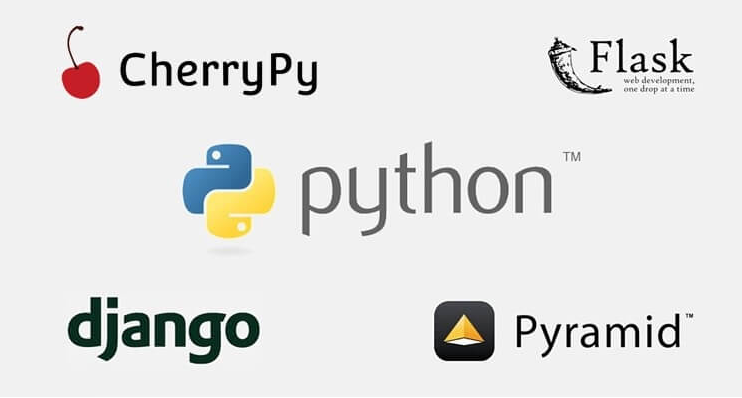
Python is a versatile language that can be used for a variety of purposes, including web development. Many different Python frameworks are available, each with its own strengths and weaknesses. This blog post will compare five popular Python frameworks for web development: Django, Flask, Pyramid, Tornado, and web2py.
1. Django
It is a high-level Python framework that is designed for rapid development. It has a built-in admin panel and ORM, and its templating system is very versatile. However, it can be quite opinionated, and some find its learning curve to be steep.
2. Flask
Flask is a microframework that is lightweight and easy to get started with. It does not have as many features as Django, but it is very extensible. Many popular Python libraries can be integrated into Flask applications with ease.
However, because it is so lightweight, some find it to be too simplistic for larger projects.
3. Pyramid
Pyramid is another high-level Python framework that balances flexibility and rapid development. It comes with several built-in features, including an URL dispatch system and templating engine.
It is also very easy to scale Pyramid applications as your needs grow. However, some find its documentation to be lacking.
4. Tornado
Tornado is a Python framework that is designed for handling asynchronous requests. It is very fast and scalable and has excellent WebSockets support. However, its API can be challenging to work with. Additionally, Tornado applications are not easy to deploy.
5. web²py
web²py is a full-stack Python framework that is designed to be easy to use. It comes with its own web-based IDE, and it can generate scaffolding for your applications. Additionally, it includes a database abstraction layer and an ORM.
However, some find its templating system to be limited, and it does not have as many features as some of the other frameworks on this list.
Which One To Use and Where?
Now that we have looked at five of the most popular Python web development frameworks, it is time to choose one. The answer to this question depends on your needs. If you are looking for a framework that is easy to get started with, then Flask or web²py may be a good choice. If you need a more powerful framework with more features, Django or Pyramid may be a better option. If you need a framework that can handle asynchronous requests, then Tornado is worth considering.
Ultimately, the best way to choose a Python web development framework is to try out each one and see which one works best for you. Each of these frameworks has its own strengths and weaknesses; the best way to find out which one is right for you is to experiment with them.
Are you ready for your next project?
We hope you found this information useful. At Alluxi we are python experts and have launched dozens of successful projects using the major python frameworks. Feel free to reach out to us and we'll recommend which one is the most adequate for your use case.
Frequently asked questions
What is the best Python framework for web development?
Django for full-featured web apps, FastAPI for high-performance APIs, and Flask for lightweight or highly custom projects.
What are the most popular Python web frameworks?
Django, Flask, and FastAPI, followed by Pyramid and Tornado.
Django vs Flask vs FastAPI — which should I use?
Choose Django when you want structure and built-in features, Flask when you want minimalism and control, and FastAPI when you need async performance and automatic API documentation.
Is Python good for web development?
Yes — its mature frameworks, large ecosystem, and strong data and AI libraries make it a top choice for web backends and APIs.
- Python software development services — how Alluxi builds and maintains Python apps.
- Custom software development services — end-to-end product builds.
- The complete guide to the SDLC — the process we run around the framework you choose.