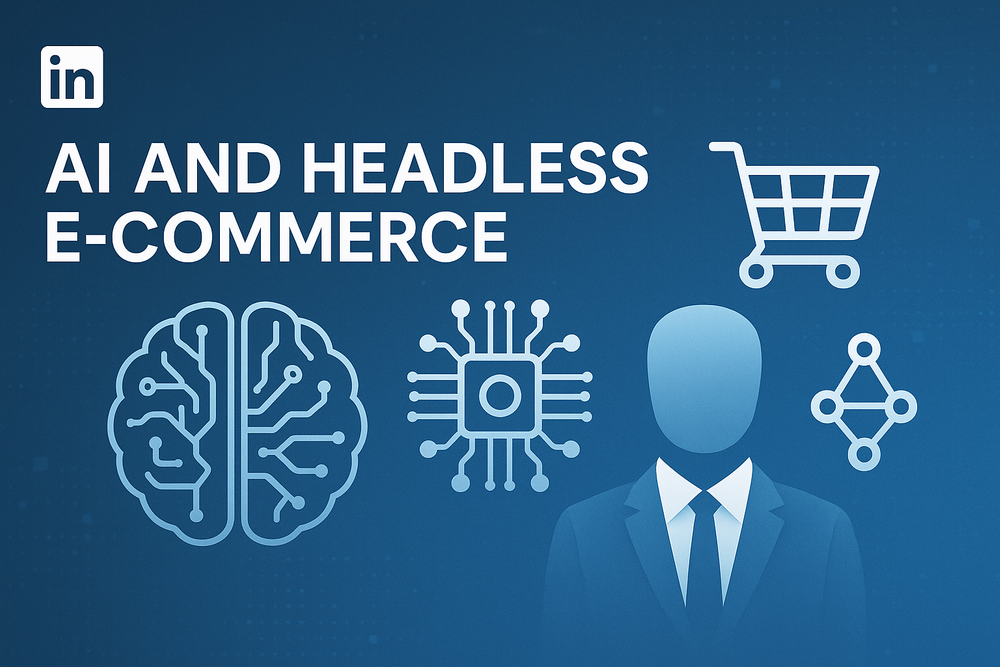
AI & Headless Architecture applied to E-Commerce
Imagine your online store could adjust itself in real time based on customer behavior, integrating blockchain rewards with traditional payment methods. Some stores are already turning this into a reality.
AI Engines define customer experiences
Artiticial Intelligence is not just recommending products, it can fully personlize the entire shopping journey. We've seen predictive althorithms analyze browsing patterns to suggest relevant products before users even search, which can boost conversions up to 40% for some products. But even further these systems can learn from interactions, adapting even the tone of the website to the type of buyer.
Cutting trough the Hype
While generative AI usually gets the spotlight, it's mandatory that it's implemented on a practical way. Tools like ChatGPT can parse customer service logs to automate common pain points to allow support agents to practively address the store issues. Meanwhile it can be used on the backoffice to optimize inventory, reudcing out of stocks during peak periods.
Headless Retail Architecture Reborn
Headless architecture is no longer a buzzwords but part of the reality. Decoupling frontend and backend systems is now the norm, specially on E-commerce where experienced retailers value flexibility, and headless e-commerce frameworks like Saleor or Medusa have matured.
When to go all in on Headless
The case depends on your business needs. As a rule of thumb go headless if you want to control every visual aspect for your site, also if your roadmap inclus AR shopping, IoT integrations, or multi-channel campaigns, headless might be for your. Otherwise, monolotihic platforms might stull suffice.
Is Crypto in e-commerce still a thing?
Blockchain is more alive than ever and it continues to evolve into digital assets ownership. From NFTs to loyalty programs and smart contracts, descentralized tech continues to exist in some practical applications. Still quite innovative and not widely adopted? For sure.
But even while crypto volatility remains, it shows some signs of maturity. Payment processors are testing stablecoings for cross-border transactions, and big markets like Ebay and FIFA continue to bet hard on branded collectibles. However Web3 remains mostly experimental in terms of business models. The winners will carefully balance innovation with regulartory compliance.
What questions do you have about building next-gen commerce systems?