Why your healthcare app's FHIR integration is harder than it should be
Every vendor pitch for FHIR makes it sound like plugging in a USB cable. Standard API, structured data, modern REST architecture, what could go wrong?
Everything. Everything can go wrong.
We build healthcare integrations at Alluxi regularly, and I can tell you the gap between "FHIR-compliant" on a spec sheet and actually pulling usable patient data from an EHR is enormous. It's the kind of gap that turns a 3-month project into a 9-month one if your team isn't ready for it.
The spec says one thing, the EHR does another
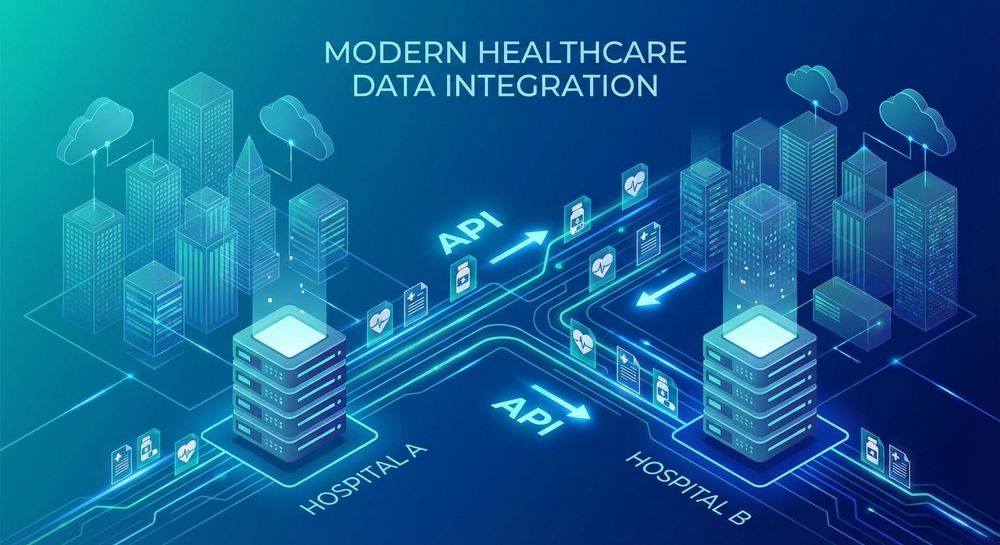
FHIR (Fast Healthcare Interoperability Resources) is a standard, yes. But it's a flexible standard, and in healthcare, "flexible" is a polite way of saying "every vendor implemented it differently."
Epic, Cerner, and Allscripts all support FHIR R4. Great. But their resource structures, extension fields, and supported search parameters vary wildly. A Patient resource from Epic looks different from a Patient resource from Cerner. Not fundamentally different, but different enough that your parsing logic breaks at 2 AM on a Sunday.
According to the ONC's 2024 interoperability report, over 96% of hospitals now have FHIR-enabled APIs available. That number sounds amazing until you realize "available" doesn't mean "easy to use" or even "fully functional." Many implementations cover only a subset of resources, and the ones they do cover come with vendor-specific quirks that aren't in any documentation.

How long FHIR integration actually takes
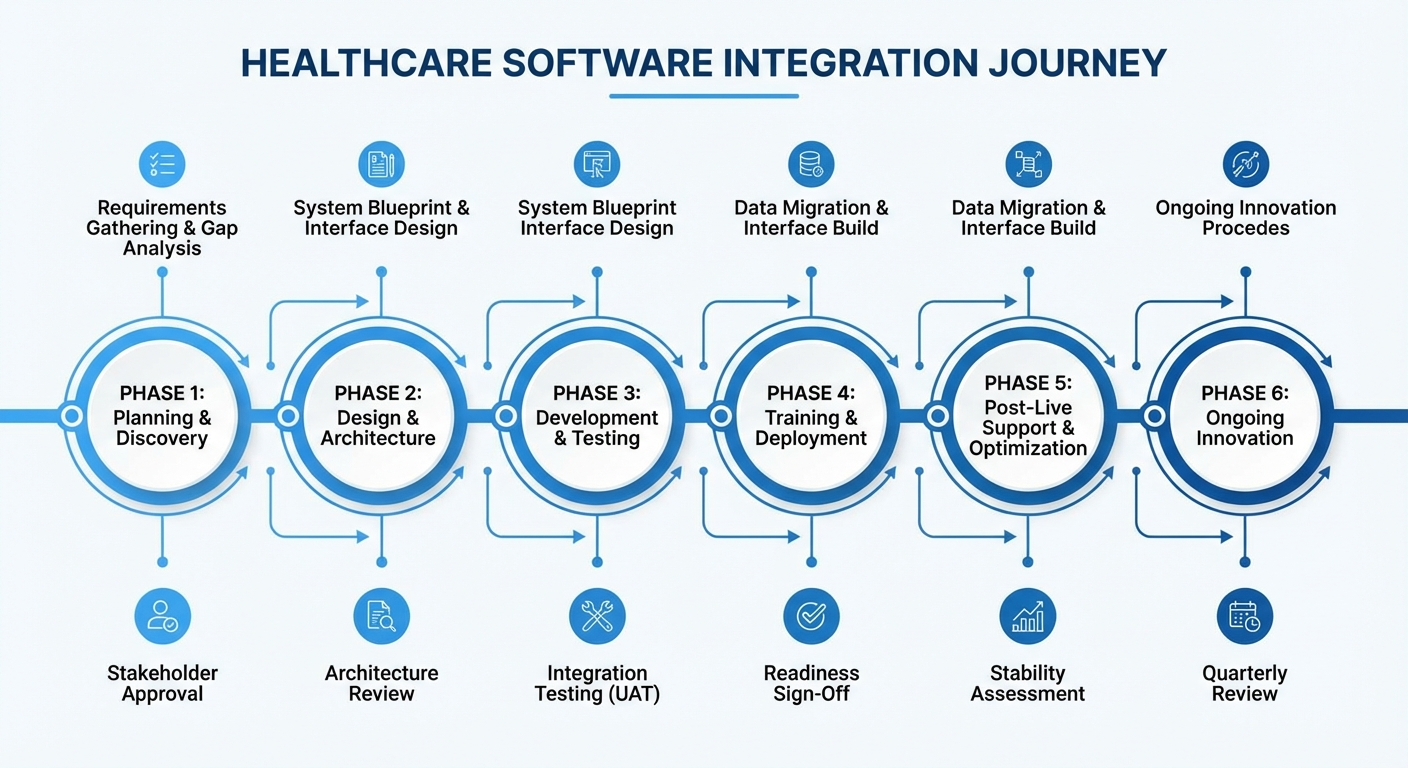
Here's the honest timeline we've seen across dozens of healthcare projects:
- Getting API access and credentials: 2-8 weeks. Yes, just getting access. Healthcare orgs move slowly on security approvals, and there's no shortcut through their compliance review.
- Building the basic connection and auth flow: 2-4 weeks. SMART on FHIR adds complexity here (more on that below).
- Mapping and transforming data: 4-8 weeks. This is where the real pain lives. Every EHR returns data slightly differently, and your app needs to normalize it.
- Testing with real clinical data: 3-6 weeks. Synthetic test data never matches production reality. You'll find edge cases in real patient records that no sandbox prepared you for.
- Compliance review and go-live: 2-4 weeks. HIPAA requirements, security assessments, and final approvals.
Total realistic timeline: 3 to 7 months for a single EHR integration. Multiply that if you need to connect to multiple systems.
I've seen teams budget 6 weeks for the whole thing because the FHIR documentation makes it look straightforward. It's not their fault, the spec is genuinely well-designed. The problem is everything around the spec.
SMART on FHIR is the OAuth 2.0-based authorization framework that controls how third-party apps access EHR data. In theory, it's elegant. In practice, it adds a significant layer of complexity that most teams underestimate.
Here's what catches people off guard:
- Scopes vary by EHR. The SMART spec defines standard scopes, but each EHR supports a different subset and sometimes adds custom ones. Your app might request
patient/Observation.readand get back a 403 because that particular EHR wants you to use a more granular scope. - Token refresh behavior is inconsistent. Some EHRs issue refresh tokens that last 24 hours. Others give you 15 minutes. A few don't support refresh tokens at all, requiring full re-authorization.
- Launch contexts differ. Whether your app launches from within an EHR (EHR launch) or standalone changes the entire auth flow. Supporting both means maintaining two code paths that share just enough logic to be confusing.
The SMART on FHIR framework is critical for any serious healthcare app, but it's one of those areas where reading the spec and implementing against a real EHR are completely different experiences.
Bulk FHIR data access: where scale meets frustration
If your app needs population-level data — analytics, reporting, research — you're looking at FHIR Bulk Data Access. This is the async API pattern where you request large datasets and poll for completion.
- Export jobs can take hours. A bulk export from a large health system might return millions of resources. You'll get NDJSON files hosted on temporary URLs with expiration windows.
- Rate limiting is aggressive. You might be limited to one bulk export per hour, or your concurrent connections might be capped at levels that make large-scale processing painfully slow.
- Data freshness varies. Some systems export from a nightly snapshot. Others export live data with a 4-hour delay. If your use case requires near-real-time population data, you'll need a hybrid approach.
We had a project last year where the bulk export endpoint returned data in a slightly non-standard NDJSON format — valid JSON on each line, but with an unexpected wrapper object. That single quirk cost us three days of debugging because our parser was spec-compliant and the server wasn't.
What this means for your team
If you're planning a healthcare app that needs EHR integration, here's what I'd actually recommend:
Start the API access process before you write a single line of integration code. The credentialing and approval process is the longest bottleneck, and it's entirely outside your control.
Build an abstraction layer early. Don't write Epic-specific code in your business logic. Create a normalization layer that translates vendor-specific FHIR responses into your internal data model. You'll thank yourself when you add your second EHR.
Budget for the unexpected. Whatever timeline you have, add 40%. Not because your team is slow, but because healthcare integration has more variables outside your control than almost any other domain.
Get experienced help if this is your first FHIR integration. There's no shortcut for the institutional knowledge of knowing which EHR quirks to watch for, which scopes actually work, and how to structure your compliance documentation.
At Alluxi, healthcare integration is one of our core verticals. We've been through the FHIR learning curve with enough EHR systems to know where the landmines are. If your team is staring down a FHIR integration and the timeline keeps growing, we should talk. Having a partner who's already navigated these waters makes a measurable difference in both timeline and cost.
The healthcare interoperability promise is real — FHIR is genuinely the best standard we've ever had. But "best standard" and "easy integration" are still very different things, and the teams that plan for that gap are the ones that ship on time.